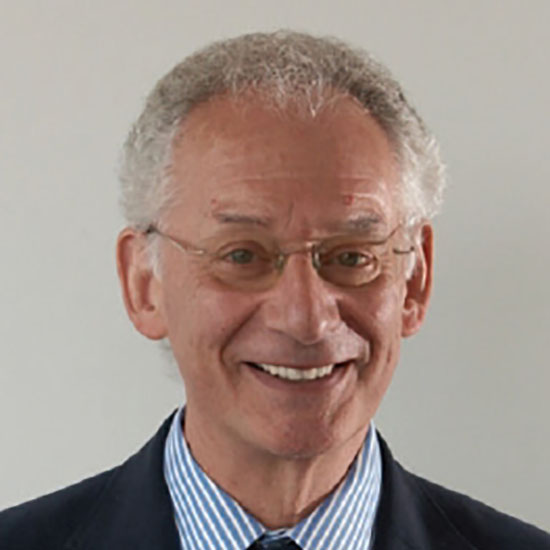
Raymond Dwek pioneered glycobiology — the study of the complex sugar molecules, or glycans, associated with cells, proteins and many viruses. By establishing the Oxford Glycobiology Institute, he created one of the world’s leading centres in a field he helped to define. His work transformed understanding of the fundamental roles glycans play in protein folding, immune recognition and cellular communication, as well as in the ability of viruses to infect and replicate within their hosts.
Glycans are among nature’s most complex and information-rich molecules, but for many years they were studied largely in isolation from the proteins to which they are attached. Raymond’s key contribution was to place these sugars in the context of the protein, showing that glycosylation is integral to protein structure, folding and biological function. By combining structural and analytical approaches, including mass spectrometry, his work made it possible to investigate how particular glycan structures relate to the proteins that carry them and to the biological processes in which those proteins participate. This helped establish a molecular framework for modern glycobiology.
An important feature of Raymond’s work has been the translation of fundamental glycobiology into medicine. Working with colleagues in the Oxford Glycobiology Institute, he contributed to the discovery of a new approach to the treatment of Gaucher disease, an inherited lysosomal storage disorder. The therapy was subsequently developed by Oxford GlycoSciences (OGS), the biotechnology company he founded to translate advances in glycobiology into new medicines, and achieved worldwide regulatory approval in 2002. It provided an early demonstration of how fundamental insights in glycobiology could be carried from academic discovery through biotechnology to an approved treatment for human disease.
One of Raymond’s most far-reaching insights was to apply an understanding of glycoprotein processing to viral disease. Many enveloped viruses depend upon the host cell’s own machinery to fold and process the glycoproteins required to produce infectious virus particles. Raymond and his colleagues showed that iminosugars can inhibit key host-cell enzymes involved in this process, disrupting the correct folding of viral glycoproteins and thereby impairing viral infectivity. Because this strategy targets host pathways exploited by many different viruses, rather than a single virus-specific protein, it offers the prospect of broad antiviral activity. Iminosugar-based approaches arising from this work have been investigated against viruses including dengue, Zika, hepatitis B and SARS-CoV-2. The underlying concept — targeting cellular machinery on which diverse viruses depend — has important implications for the development of broad-spectrum antivirals and for future pandemic preparedness.
Raymond’s scientific work has also contributed to international scientific collaboration. In 2000, he was awarded Romania’s National Order of Merit for his contributions to British–Romanian science in biochemistry and molecular biology. In 2013, he was appointed Commander of the Order of the British Empire (CBE) for services to UK–Israel scientific collaboration.
Subject groups
-
Molecules of Life
Biophysics and structural biology