It took a long time to elect the first female Fellows, the Royal Society is still far from parity in its Fellowship, and all of us have a part to play – across society or the Society – in making sure we continue to move forward.

From March 2025 to March 2026, The Royal Society has been commemorating the 80th anniversary of the election of our first women Fellows and honouring the achievements of women in STEM.
As we enter the final month of celebrations, the Royal Society’s Diversity & Inclusion team have curated a series of blogs by, and about, leading women in science, their reflections on the progress made over the last 80 years and the work still to come.
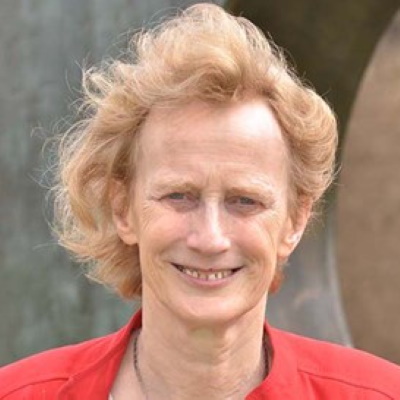
The series kicks off with a piece from Dame Athene Donald FRS, a pioneering soft matter physicist who served as the University of Cambridge’s first Gender Equality Champion, and has served both as Chair of the Royal Society’s Education Committee and as a member of its governing Council.
In 1945 the Royal Society finally admitted its first female Fellows: the crystallographer Kathleen Lonsdale and the biochemist Marjory Stephenson. It had taken quite a while to reach this point after the first woman was nominated in 1902. That was Hertha Ayrton, whose nomination was thrown out on the grounds that she was a married woman and therefore had no standing under the legal system of the time. However, even after the passing of the 1919 Sex Disqualification (Removal) Act, there was no immediate move to nominate other women. It took until 1943 for this subject to be seriously revisited, leading (after the Fellowship had been consulted, of course all men) to the election of these first two trail-blazing women in 1945.
Since then, the number of women in the Fellowship has slowly grown to its present percentage of around 14%. That is still a disappointingly low proportion, but looking at the rate of recent elections, averaging over the past five years, the percentage of women elected annually has been 27.6% to the Fellowship and 29.4% to Foreign Membership. Not yet good, not yet anywhere near parity, but a healthy increase. Sadly, these things take time and in many of the disciplines within the Royal Society’s remit, the pool of senior women who could be nominated also remains stubbornly low and well below 50%.
So, what needs to be done now, after 80 years of slow progression? There is a fundamental problem about the pipeline of female talent starting out. This is particularly acute in my field of the physical sciences.
The message conveyed to too many girls and young women is that subjects like computing, engineering or physics are not for them. We need to counter this at all levels of society, but change has to start within the school environment. Any number of signals can reinforce the pervasive societal stereotype that ‘girls don’t do maths (or physics or computing)’; from a teacher’s casual comments, to who is encouraged to join science clubs, or the choice of scientists explicitly named in the curriculum. These signals can have a massive effect on a students’ vision of themselves, and what girls – or boys - choose to pursue at A level. Everyone has a part to play in countering such unhelpful stereotypes, and demonstrating that everyone is welcome within the scientific community across all disciplines.
Talent needs to be celebrated wherever it is found, regardless of gender, skin colour or socioeconomic status. The Royal Society, as an institution and as the national academy representing science in the UK, has to ensure it embodies that principle: be it in the portraiture on its walls or the prizes it awards; the composition of its committees or its fellowships at every stage. That responsibility extends to individual Fellows of the Royal Society too. We must think carefully about our own biases and take steps to address them if we are truly to move forward.
Only then will the Royal Society be fully representative of the scientific population, ready to do its best for the future of science.
Image: Kathleen Lonsdale