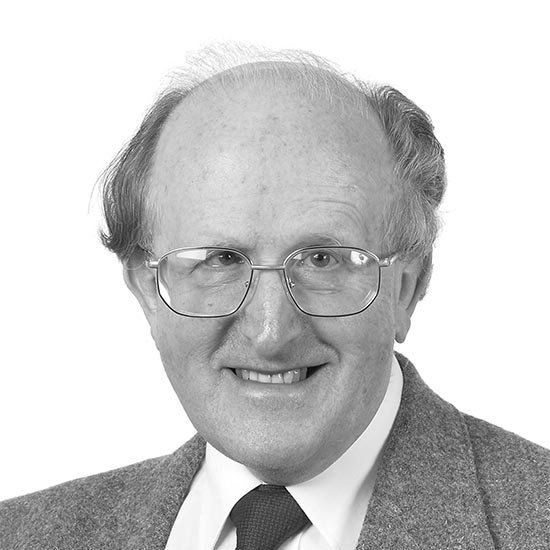
John Ellis’s early work concerned sulfur metabolism in bacteria and plants where he established the control of sulphate reduction by feedback inhibition. Since 1970, he has contributed to our understanding of the interaction of nuclear and chloroplast genomes to produce the chloroplast enzyme ribulose bisphosphate carboxylase/oxygenase (RuBisCO), a key enzyme of photosynthesis and probably the most abundant protein in the world. The enzyme consists of large subunits encoded and synthesised within the chloroplast, and small subunits encoded in the nucleus and synthesised by cytosolic ribosomes.
John originated using light as an energy source for intact isolated chloroplasts as a means of identifying the function of chloroplast ribosomes and of chloroplast DNA. John’s work led to a great increase in research by other laboratories using in vitro methods to investigate the chloroplast genetic system. Since his election in 1983, John has received two international awards for developing the general concept of molecular chaperones as modulators of protein folding and protein assembly in all cells. This concept originated from his discovery of a chaperone in RuBisCO synthesis.
Subject groups
-
Molecules of Life
Biochemistry and molecular biology
Awards
-
Croonian Medal and Lecture
On 'Molecular chaperones: how cells stop proteins from misbehaving'.
-
Bakerian Medal and Lecture